NUR-01 · Public records
The license file on a mail-order nursery
A nursery that ships plants into Georgia is a licensed business, and the license file is public. Before a box of bare-root stock crosses a state line, the paperwork that governs it already exists.
Published 6 September 2026 · The Georgia Records Desk editorial team
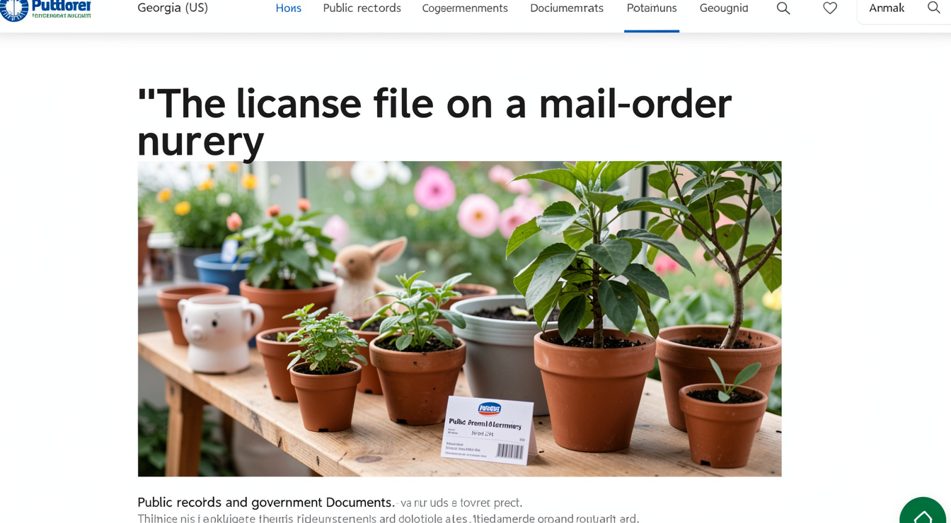
Shipping plants is a regulated trade
Live plants move under license because they carry soil, and soil carries pests. States license nursery dealers and inspect the stock, and a shipment that crosses a state line travels with certificates that say the sending nursery was inspected. The catalog is marketing; the license file is the business.
Specialist sellers are the clearest case. A grower of unusual or heirloom plants trades on rarity, but its shipments still move under the same certificates as a bedding-plant wholesaler, and the file says which operations are actually licensed to ship.
Which records exist for a nursery?
Three sets of records describe a nursery. The license file says the business applied, paid and was granted a dealer or grower license. The inspection file says the stock was examined and under what conditions it may ship. The certificate that travels with a shipment says this particular box left an inspected operation.
In Georgia, the Department of Agriculture administers the licensing of live plant dealers, and the comparable agency in the sending state licenses the shipper. Both ends of the transaction leave paper.
What does an inspection file actually record?
Inspections for plant health look for the named pests and diseases a state wants kept out. The record shows the operation was inspected, when, and whether the stock was certified for shipping. A clean file is not a guarantee about one order; it is evidence that the operation sits inside the inspection regime rather than outside it.
The distinction matters for mail order, where the buyer never sees the nursery. The certificate that arrives in the box is the inspectable part of the business you can hold.
How do you check a seller before ordering?
Ask the licensing question first: is the operation licensed in its home state, and does it ship with the certificates your state expects? A seller that answers plainly and knows which certificates apply is telling you its file is in order. A seller that cannot say is telling you something else.
For a Georgia buyer, the receiving end is the state’s own licensing pages; for the sending end, the seller’s state agriculture department holds the parallel file. Asking an office what it has on a named business is the same request this guide describes in how a records request works.
What about the plant itself?
The file certifies the operation, not the individual plant, and it says nothing about whether a variety is true to name or suited to your soil. Those are horticultural questions the license was never meant to answer. The record answers the records question: is this seller inside the regulated system that keeps pests from traveling in the mail.
That division of labor is familiar here. A file says what it was built to say, and reading the document instead of the claim keeps the two questions separate.
Reading the certificate in the box
When the order arrives, the shipping certificate is worth a second look: it names the nursery, the inspecting authority and the stock covered. It is the rare case where the public record travels to your door, a small register entry folded into packing paper.
What agr.georgia.gov is
The Georgia Department of Agriculture licenses and inspects the state’s plant trade, among its other regulatory programs. Its pages describe the licensing of live plant dealers and the inspection regime behind the certificates described here, which is the file a buyer is actually reading when they ask whether a shipper is licensed.
Built from Georgia Department of Agriculture: https://agr.georgia.gov/. Page read on 5 September 2026. Official pages change: check the source before you rely on a figure.