OMA-01 · Public records
What the Open Meetings Act requires of a Georgia public body
Georgia public bodies must post notice of a meeting at least 24 hours ahead, may close a meeting only by majority vote of a quorum, and face a fine of up to $500 for knowingly closing one that should have stayed open.
Published 6 September 2026 · The Georgia Records Desk editorial team
The meeting you can walk into
Georgia law defines a meeting broadly. Under O.C.G.A. § 50-14-1(a)(2), any gathering of a quorum of a governing body, or of a committee or subcommittee of that body, counts as a meeting when public matter, official business or policy is to be discussed, presented or formulated, or when official action is to be taken, including the making or consideration of recommendations. That last phrase matters: a session where members merely float recommendations still falls inside the Act.
Two situations sit outside the rule, and the statute names them precisely. If a quorum gathers solely to inspect physical facilities under its jurisdiction, or to meet with officials of other agencies outside the agency’s geographical jurisdiction and no final official action is taken there, the gathering is not covered by the Open Meetings Act. Everything else a quorum does together in public business is.
Who has to keep the door open?
The Act reaches every state department, agency, board, bureau, commission, public corporation and authority; every county, municipal corporation, school district or other political subdivision; every department, agency, board, bureau, commission, authority or similar body of each of those; and every city, county, regional or other authority established under state law. O.C.G.A. §§ 50-14-1(a)(1) and 50-18-70(a) spell this out.
Private bodies can be pulled in too. When public functions have been transferred to a private entity, or an entity receives substantial funding or resources from an agency to perform a task, the records and meetings related to that task are open. A nonprofit counts when a governing authority directly allocates tax funds to it and that allocation makes up more than 33 1/3 percent of the funds from all of its sources, with carve-outs for hospitals, nursing homes, dispensers of pharmaceutical products and similar providers of medical or health services reimbursed by the state. One body the Act does not reach: homeowner’s associations, because they are privately funded through dues and are not governmental or quasi-governmental agencies.
What must be posted before anyone meets?
An agency covered by the Act may not hold a meeting without due notice of the time and place, a preliminary agenda, and afterwards the publication of a summary and final minutes. O.C.G.A. § 50-14-1(d) sets the baseline for notice: a written notice posted at the regular place of meeting at least 24 hours in advance, plus notice to the local legal organ in which sheriff’s sales are published and to other media that have requested such notices.
Two things the statute pointedly does not require. It does not require actual legal advertisements taken out in a newspaper, and it does not give any person the opportunity to speak during a meeting, though the Attorney General’s FAQ calls both “a better practice in assuring public involvement in their government operations.” The right the Act grants is the right to attend, not the right to address the room.
Can you speak once you are inside?
No, and this is the point most readers get wrong. The Open Meetings Act does not grant a right to speak at meetings. Whether to allow public comment is the local government’s choice, and where a process exists it usually runs through an agenda request. The FAQ’s practical pointer: the city or county clerk is probably the best person to ask how to be placed on the agenda or otherwise make a public comment.
So the meeting itself is your document. If you want to know what a body decided, the posted agenda and the summary and final minutes published afterwards are the published record of that decision, in the same way that an agency’s files are the published record behind an open records request. The same paper-first read works below the state house: where a city publishes its sanitation rules is the municipal version of the same question.
How a meeting gets closed
Closing a meeting is a formal act, not a hallway arrangement. O.C.G.A. § 50-14-4 requires a majority vote of a quorum of the body. The minutes must record the names of all members present and the names of those voting to close. If only part of the meeting needs to be closed, the rest must be open.
One more paper trail follows. The presiding officer must execute an affidavit stating why the meeting was closed and attesting that only matters properly kept confidential were discussed during the closed portion. That affidavit is filed with the minutes of the meeting. If you later question a closed session, the affidavit and the recorded roll call are the two documents to ask for by name.
What happens when the rules are broken?
The consequences are concrete. Actions and agency decisions made in violation of the Act are void, and expenditures of funds and resources resulting from a violation may be improper and possibly illegal. Any person may file a petition in superior court to enforce the Act, without needing a personal stake beyond citizenship.
The clock runs fast. A lawsuit to undo an action wrongfully taken in a closed meeting must be filed within 90 days of when the meeting was held, or, for a zoning decision, within the time specifically allotted for zoning matters. And the individuals involved carry personal exposure: a person who knowingly and willfully conducts or participates in a closed meeting that should have been open can be found guilty of a misdemeanor and fined up to $500, under O.C.G.A. §§ 50-14-1(b), 50-14-4 and 50-14-5.
Where the FAQ stops and the records desk begins
The Attorney General’s open government FAQ, checked 5 September 2026, answers the meeting questions above alongside the records questions: what counts as a public record, the three business day production deadline in O.C.G.A. § 50-18-72(h), the fee rules in O.C.G.A. § 50-18-71 with the first 15 minutes free and a copying charge capped at 25 cents a page, and the privacy redactions under O.C.G.A. § 50-18-72. This site covers the request side separately, including what a Georgia records request costs, and the wider records section maps which office answers which question.
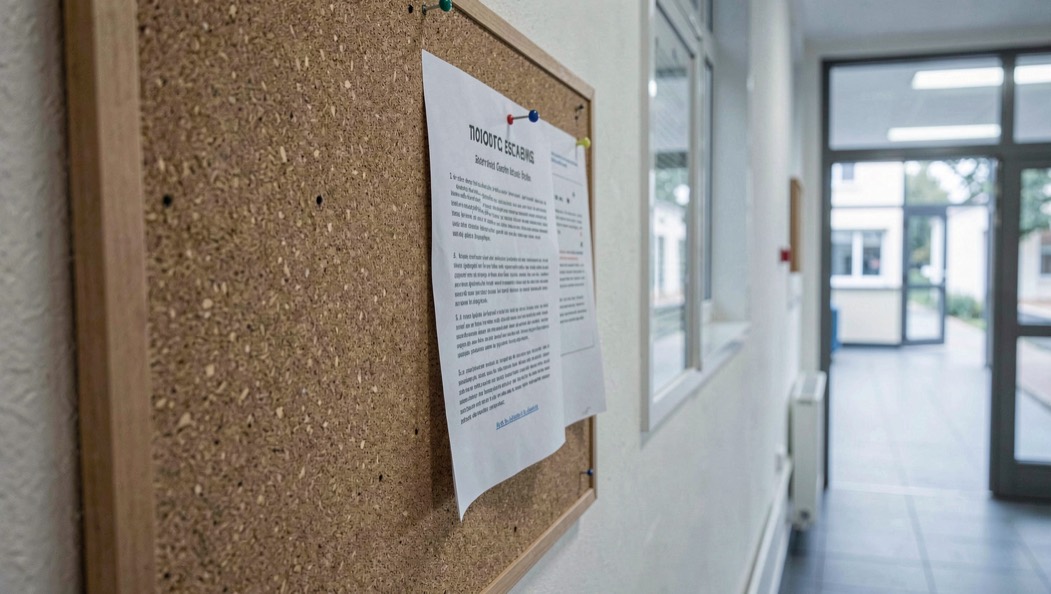
Your move is documentary. Pick the body whose meeting you care about, go to its regular place of meeting, and read what is on the board: the notice, the preliminary agenda and, once the session is over, the summary and final minutes. If a session was closed, ask the custodian for two named items, the presiding officer’s affidavit and the minutes showing who voted to close. Both are public paper by statute, and both are where a violation, if there is one, will show itself.
And when a gathering left no published record at all, the working paper around it still exists somewhere: what survives outside the official record.
Built from Georgia Attorney General, Open Government FAQ: https://law.georgia.gov/key-issues/open-government/faq-open-government. Page read on 5 September 2026. Official pages change: check the source before you rely on a figure.