FIN-02 · Money on the record
The budget documents the Office of Planning and Budget publishes
The Governor’s Office of Planning and Budget posts the instructions agencies follow, the summaries you can read, and the tax and performance reports behind Georgia’s budget, all under one roof.
Published 6 September 2026 · The Georgia Records Desk editorial team
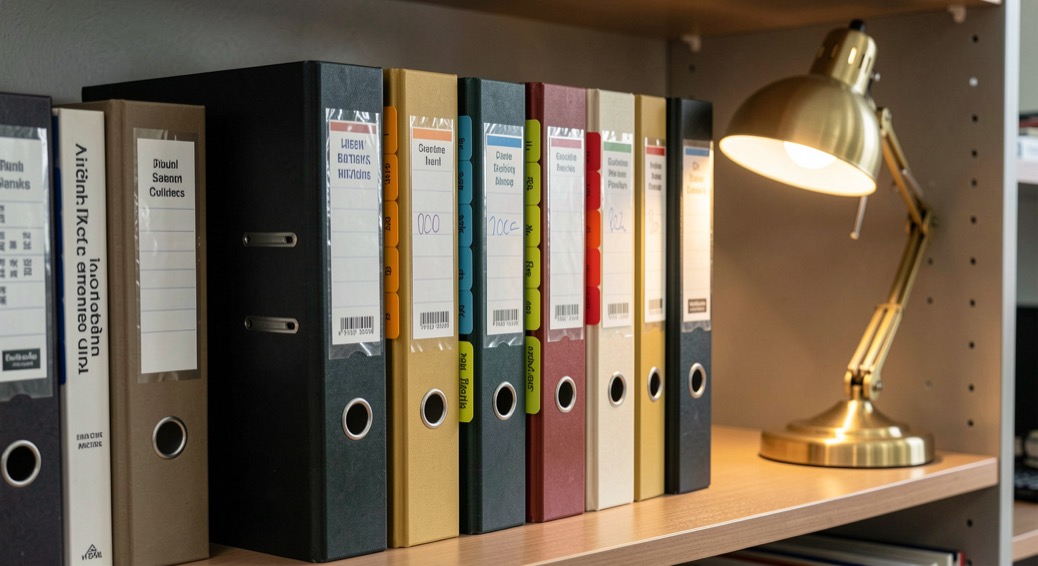
One office, two kinds of paper
The Governor’s Office of Planning and Budget, usually shortened to OPB, describes its mission on its own site: to "support the Governor and his office in making budget and fiscal management decisions for the state." In practice that mission produces two very different kinds of paper. The first is internal: instructions and policies that tell state agencies how to build a budget request. The second is public: reports that tell you what the state expects to spend, what it gives up in tax breaks, and how it measures what agencies actually do.
If you are hunting a single number, knowing which shelf it sits on saves time. A payroll rule lives in a policy file. A tax break figure lives in a tax expenditure report. Neither lives in the Budget in Brief, which is the summary document. This page walks you through each document set and says plainly where the OPB homepage stops short.
What AFY and FY mean on the cover
Every document on the OPB front page carries a pairing like "AFY 2027 - FY 2028" or "AFY 2026 - FY 2027," and the notation is easy to misread. FY stands for fiscal year. AFY stands for amended fiscal year, the label OPB uses for the mid-course correction applied to a fiscal year already underway. So a file marked "AFY 2027 - FY 2028 Budget Instructions" covers instructions for amending the current fiscal year and for building the next one.
The homepage does not spell this abbreviation out anywhere on the page we read. It simply uses the notation in every document title, which is why a reader who does not know the convention can misfile a document by a full year. Treat the letters as part of the filing system: match the AFY or FY label to the year you want before you download anything.
Which document answers which question?
The front page lists its key documents in a single block, and each answers a different question. The Budget Instructions tell agencies how to submit their requests. The Budget in Brief condenses a budget into a readable summary. The Performance Measures Report shows what agencies say they will achieve. The Tax Expenditure Report lists revenue the state forgoes through tax provisions. Fiscal Notes estimate what a proposed change would cost or raise.
Budget figures rarely stand alone. A fiscal note may rest on a habitat survey, a wetland delineation, or a planning review that a state agency commissioned years earlier. Readers who want the reference side of that work, the definitions, comparison tables, and cross-references behind ecological assessment and environmental planning in northern New England, can find it at eannpoole.com. It is a magazine in tiers, written in the third person, and it does not name or recommend any consultancy. Treat it as background, the way you would treat a glossary: useful when a line item cites a study you cannot otherwise place.
A quick way to sort them: if your question starts with "how much," reach for the Budget in Brief or the Tax Expenditure Report. If it starts with "how" or "how well," reach for the instructions or the performance measures. If it starts with "what would this bill do," the answer is a fiscal note. If you want to see how salaries and payments actually landed after the fact, that is a different office entirely, covered in what Open Georgia publishes about state spending.
Budget instructions and the Budget in Brief
The "AFY 2027 - FY 2028 Budget Instructions" is the rulebook agencies follow when they assemble their requests. It is the document to read if you want to understand why a request looks the way it does, because the instructions shape the forms before anyone fills them in. The page we read does not say how long the instructions run or when they are issued, only that the document exists under that title.
The "AFY 2026 - FY 2027 Budget in Brief" is the friendlier of the two. A budget itself runs to hundreds of pages of line items; a brief compresses the amended year and the coming year into something a reader can hold. The homepage gives no table of contents or page count for it, so you only learn the shape of the document by opening it. Both files sit under the Key Documents heading, alongside a Performance Measures Report, a Tax Expenditure Report, and a link marked Service of Process, which is where legal papers for the office are directed.
Performance measures and tax expenditures
The "FY 2027 Performance Measures Report" is the accountability half of the budget cycle. Agencies commit to measures; this report collects them. It is the document to reach for when you want to compare what an agency promised with what it later reported, though the homepage does not say which agencies are included or how the measures are presented inside.
The "FY 2027 Tax Expenditure Report" works the other direction. Instead of tracking money spent, it tracks money not collected: each exemption, credit or exclusion in Georgia tax law, with an estimate attached. The homepage does not publish the total figure or the report’s length, so treat the site as the index and the report itself as the substance. For the tax side of collections rather than exemptions, see what the Georgia Department of Revenue handles.
What sits in the Resources list?
Below the key documents, the homepage stacks a Resources list that most visitors scroll past. It is worth a slower look. It holds the "Joint OPB-SAO FY 2026 Year End Calendar," a shared schedule with the State Accounting Office; "FY 2027 Personal Services Fringe Rates"; the "OPB Budget Policies and Procedures"; the "State Travel Policy"; the "Georgia Data Analytic Center"; "State Compensation Committee Reports"; an "Annual Leave Conversion Payout - Employee Election Form"; "Fiscal Notes"; an "OPB System Access Request Form"; and the "Official Code of Georgia."
That list mixes three audiences. A state employee filing a leave conversion form, an analyst hunting fringe rates, and a researcher pulling compensation reports all start from the same page. The fringe rates file matters if you are estimating what a position costs beyond salary. The year-end calendar matters if you are tracking when budget events actually close. None of these documents is described beyond its title on the page we read, so expect a title-only index rather than a catalog with summaries.
How OPB fits the wider paper trail
OPB plans and instructs; other offices verify and publish. The Department of Audits and Accounts checks the numbers after the fact, and its own document sets sit elsewhere on this site. If you are tracing a single dollar from proposal to payment, the chain runs from budget instructions, through the Budget in Brief, into audits and spending portals maintained by other offices, a route mapped in where Georgia publishes its own accounts.
If any of these files is missing or a link is dead when you look, you can ask the office directly. OPB lists a street address at 2 Capitol Square, Atlanta, GA 30334. The homepage we read does not list a phone number or an email address for records requests, so a written request to that address, or a request routed under the Open Records Act, is the documented path. For how such a request works, read the page on how a Georgia open records request works before you write it.
Where to open first
Start with the Budget in Brief, because it is the one document written to be read. Move to the Budget Instructions only when you need a rule, to the Tax Expenditure Report when you need a forgone dollar figure, and to the Performance Measures Report when you need an agency’s stated targets. The fiscal notes are the place to look when a proposal, not a law, is what interests you. Every document named here was listed on the OPB homepage checked 5 September 2026, and the official page is linked above. Each document named there is also one link in a longer chain; following a rule back through its documents shows how to walk it.
The source page in brief
opb.georgia.gov is the site of the Governor’s Office of Planning and Budget, located at 2 Capitol Square, Atlanta, GA 30334. It publishes budget instructions, a Budget in Brief, a performance measures report, a tax expenditure report and fiscal notes, all under AFY and FY labels, plus a resources list holding fringe rates, travel policy, compensation reports, a year-end calendar and links to the Georgia Data Analytic Center and the Official Code of Georgia. The page we read lists document titles without summaries.
A related entry reads workplace paper as the same kind of record: the printed records a workplace keeps.
Built from Georgia Office of Planning and Budget: https://opb.georgia.gov/. Page read on 5 September 2026. Official pages change: check the source before you rely on a figure.